

Are you struggling with your washing machine not filling properly or leaking unexpectedly? Recognizing washing machine inlet valve symptoms early can save time and costly repairs. This essential part regulates water flow into your washer, and when it malfunctions, the washing performance suffers dramatically. In this article, we'll walk you through how to accurately diagnose problems related to your washing machine’s inlet valve and provide straightforward solutions—including cleaning, testing, and replacement tips—to get your appliance back on track.
Common Washing Machine Inlet Valve Symptoms
Identifying Faulty Valve Signs
Understanding clear symptoms of a faulty inlet valve helps narrow down the cause of washing machine troubles. Watch for these common signs:
- Washer fails to fill with water or fills very slowly despite the water supply being on
- Continuous water flow into the drum even after the cycle stops, risking flooding
- Leaks or drips coming from the inlet valve area during operation
- Loud humming or buzzing noises when the machine tries to fill
- Washer stops mid-cycle with water-related error codes
Why These Symptoms Matter
Each symptom implicates the inlet valve's ability to regulate water intake. For example, slow filling usually suggests clogged filters or partial valve blockage, while constant filling points to a valve stuck open. Leaks indicate damaged seals or loose connections. Recognizing these patterns lets you tackle repairs more efficiently, often avoiding unnecessary replacement of unrelated parts.
How to Inspect and Clean the Washing Machine Inlet Valve
Safety First: Preparing Your Washer
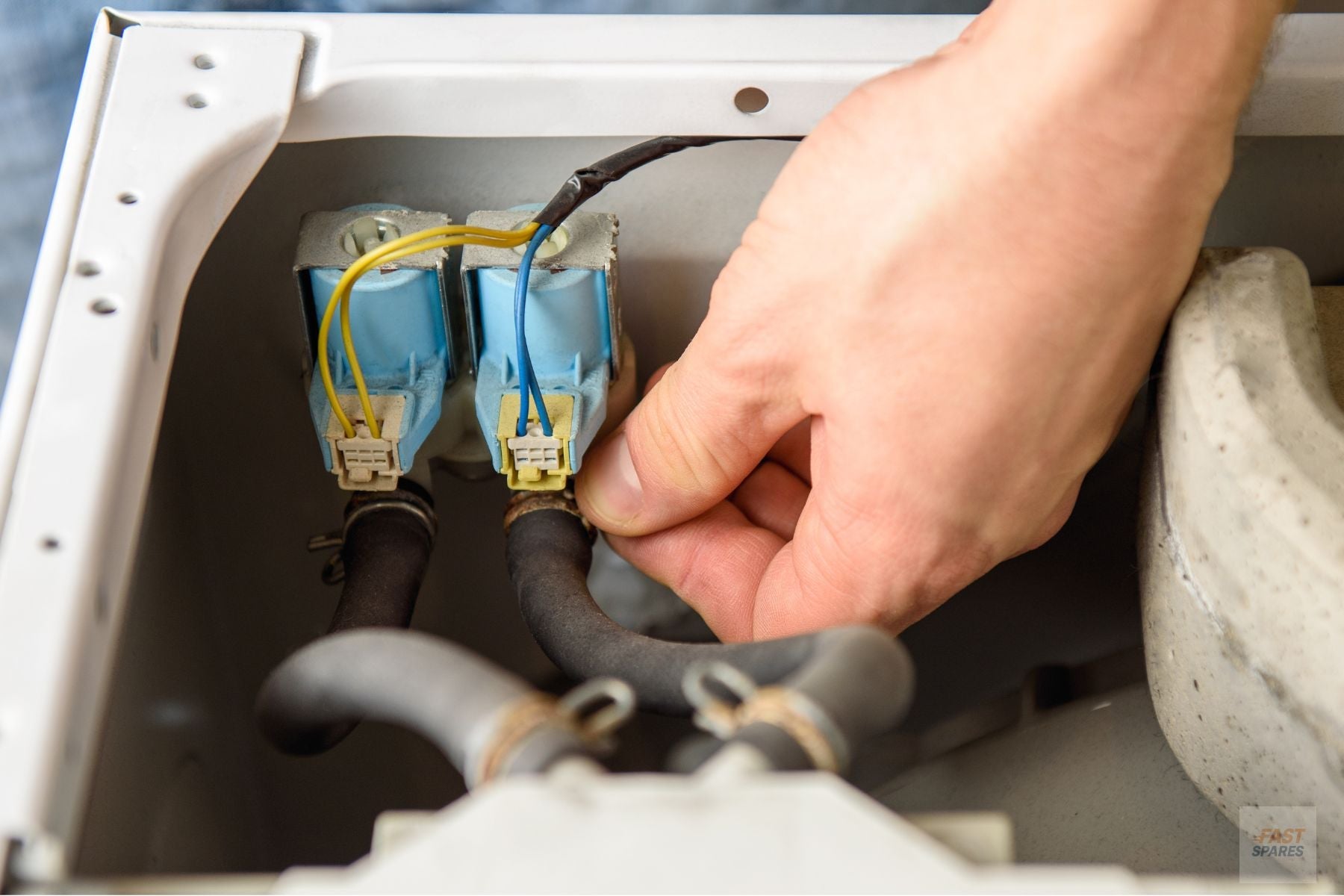
Before inspection, ensure you unplug the washing machine from the power source and shut off the water supply valves. Pull the machine slightly forward to access the back panel. Removing this panel typically reveals the inlet valve connected to the hot and cold water hoses.
Cleaning Filter Screens and Valve Port
Most inlet valves have small filter screens inside the water hose connectors to prevent debris from entering the washer. These screens can clog with mineral deposits or dirt, restricting water flow.
- Disconnect the hoses from the inlet valve.
- Inspect screens for dirt buildup or debris.
- Clean the screens carefully using a soft brush or soak in vinegar to dissolve mineral deposits.
- Check the valve port inside the washing machine for visible clogging or damage.
- Reattach hoses firmly but avoid overtightening to prevent damage.
Cleaning filters often restores adequate water flow and may resolve minor symptoms without replacing the valve.
Testing the Inlet Valve Solenoids for Electrical Issues
Using a Multimeter to Test Continuity
The washing machine inlet valve relies on solenoid coils that actuate the valve to open or close water flow based on electrical signals. Faulty solenoids prevent the valve from functioning properly.
- Unplug the washer and remove the back panel to access the valve wiring.
- Disconnect the wiring connectors from the solenoid terminals, labeling them for correct reattachment.
- Set a multimeter to the ohms (Ω) or continuity setting.
- Measure the resistance between the two terminals of each solenoid coil.
- Normal resistance values typically range between 500 and 1500 ohms (manufacturer-dependent).
- Readings of zero or infinite resistance indicate a burnt-out or broken coil requiring valve replacement.
Why Electrical Testing is Crucial
Even if the valve looks physically intact, solenoid failure will prevent water flow or cause continuous flow problems. Testing with a multimeter removes guesswork and ensures correct diagnosis before purchasing parts.
Replacing a Faulty Washing Machine Inlet Valve
Choosing the Right Replacement Valve
Replacement valves must be selected carefully for compatibility. Universal valves, such as the W125 Universal washing machine valve, provide a reliable option for many common washer models and even some that use dual inlet valves like dishwasher dual inlet valve assemblies. However, always verify fit and connection sizes before purchasing.
Steps to Replace the Inlet Valve
Follow this checklist to replace your washing machine’s inlet valve safely:
- Turn off water supply and unplug the washing machine.
- Disconnect the water hoses from the inlet valve.
- Remove screws or clips securing the valve to the machine frame.
- Label and disconnect wiring harnesses from the solenoids.
- Remove the faulty valve carefully.
- Install the new valve, reconnect hoses and wires as labeled.
- Secure the valve in place and double-check connections for tightness.
- Turn on water supply, plug in the machine, and test for leaks and proper filling during a rinse or wash cycle.
Replacing the valve yourself can be cost-effective and restore your machine quickly. However, if uncertain, professional help should be sought.
Preventive Tips to Avoid Valve Problems
Regular Maintenance Practices
Keep your washing machine inlet valve functioning optimally by:
- Regularly inspecting and cleaning filter screens every few months
- Checking hoses for wear, cracks, or kinks that might affect water flow
- Ensuring water pressure in your home is within the recommended range
- Considering installing a water softener if hard water leads to mineral buildup
- Using quality replacement parts, such as the W125 Universal washing machine valve, for durability
Signs to Watch For Early Warning
Being proactive when symptoms first show can prevent valve replacement and save money. If you notice slow filling or unusual noises during the fill cycle, inspect and clean your inlet valve promptly.
When to Call a Professional Technician
Complex Repairs and Safety Concerns
If diagnosing washing machine inlet valve symptoms becomes overwhelming or you lack tools such as a multimeter, calling a qualified appliance repair technician is the safest choice. Professionals can swiftly diagnose issues beyond the valve—including electronic control board faults or complicated plumbing—and offer guaranteed repairs.
Cost Versus Convenience
While DIY repairs save money, some older or more complex machines can require specialized parts or knowledge. Balancing repair costs with replacement or professional service depends on your washer's age, condition, and the symptoms observed.
Recognizing washing machine inlet valve symptoms early is key to ensuring your laundry appliance remains reliable and efficient. From simple cleaning of clogged inlet screens to electrical testing of solenoids and, if necessary, installing a high-quality replacement valve like the W125 Universal washing machine valve, these steps can restore proper water flow and prevent leaks or flooding. By maintaining and inspecting your washer regularly—and knowing when to seek professional help—you can extend the lifespan of your machine and avoid inconvenient breakdowns. Explore our resources to find compatible parts and tips to keep your washer running smoothly.
